

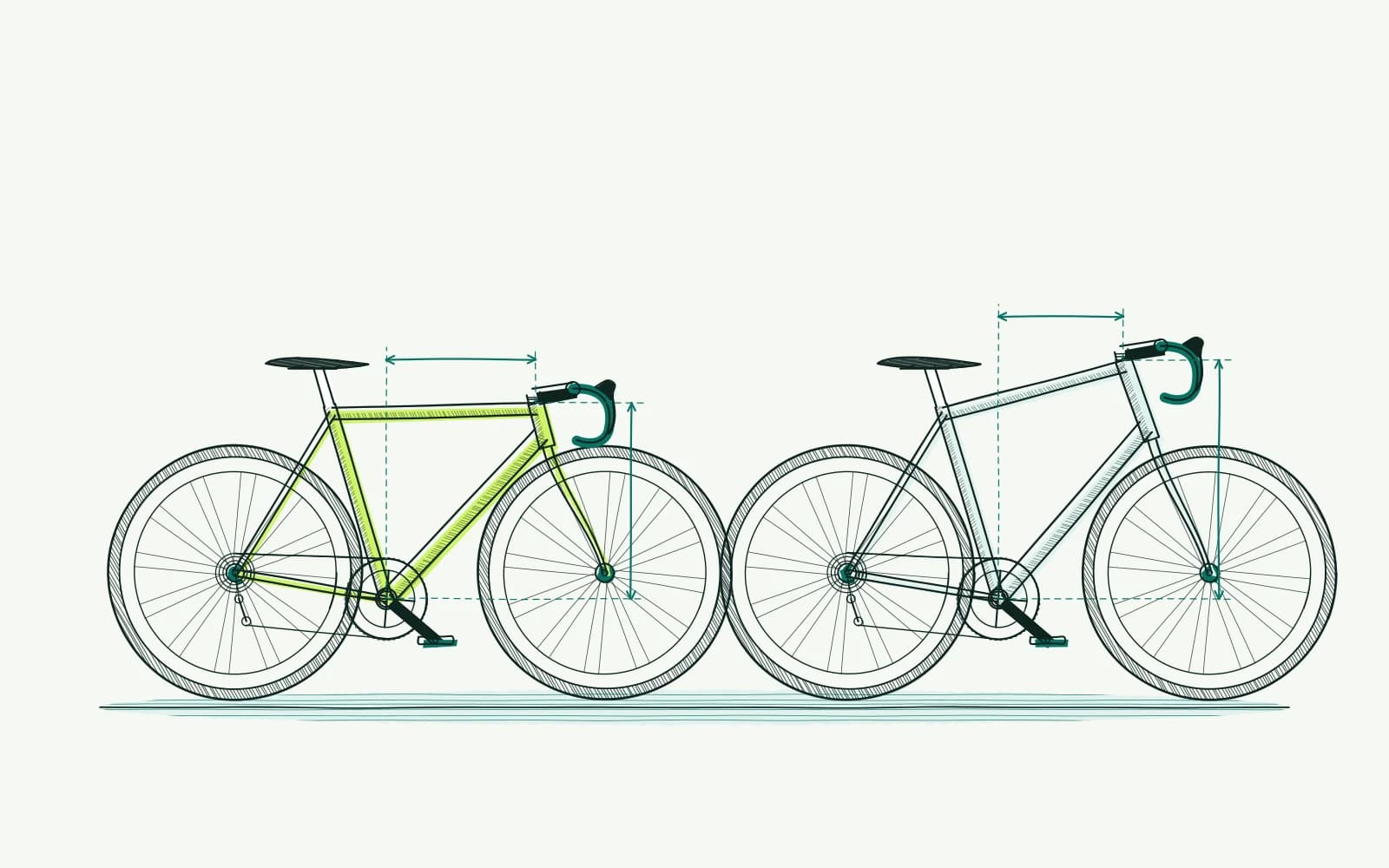
The problem: race versus endurance geometry
You are looking for a road bike and face two categories. One says race, the other endurance. Perhaps endurance sounds less sporting even though you enjoy riding hard. Or you expect the word to guarantee comfort automatically.
Both assumptions can blur the comparison.
A bike needs to suit your rides and a position you can use. A short, fast training session differs from a long day out. Route, experience and preferences all matter. A professional rider's position is not a compulsory example for your own bike.
Start by describing what you need. Do you want to use the drops more, reach the brakes comfortably or transfer an existing position? That question makes geometry comparisons purposeful. Without it, marketing names can easily replace measuring and a test ride.
The category becomes a conclusion before you have assessed the bike itself.
Background: categories are not fixed measurements
An endurance bike is often designed with room for a less low position. A race-oriented bike may start lower and longer. That describes a tendency, not a technical standard. Models and generations differ, and categories can overlap.
Check the chart for the exact size and version.
Stack and reach provide common reference points. Stack describes vertical frame height from the bottom bracket to the head tube. Reach describes the horizontal distance between those points. Higher stack does not automatically put the installed hoods equally higher.
Stem, spacers and bar shape contribute too.
A low position needs to remain usable. You want to see the road, brake easily and change hand position. Comfort is not the opposite of sporting riding. A position you can tolerate only briefly says little about a long ride.
A shop photograph cannot reveal that difference.
The bike's other properties remain important. Consider permitted tyres, gearing, controls and opportunities for maintenance or replacement. An integrated front end may allow fewer simple adjustments. Assess geometry alongside the complete build for that reason.
The frame chart is only part of what you will eventually ride.
A sizing chart helps select candidates. It cannot prove which model feels pleasant or steers well for you. Use category names to begin the search and measurements to check it. A test ride and, when needed, a fitter add missing information.
Do not buy a promise of comfort without that practical check.
How to approach it with bike fitting
-
Describe normal use: Record ride duration, surfaces and the hand positions you actually use. Write what your current bike does well and what is missing. Do not change category solely because it sounds faster or more comfortable.
A concrete aim, such as easier access to the hoods, helps when comparing actual builds rather than labels.
-
Compare matching information: Collect official stack and reach for the candidates in the intended size. Record millimetres, model year and measurement definition. Do not compare a race bike in one size with an arbitrary endurance size.
The frame size calculator can suggest an initial direction, after which you examine geometry separately.
-
Bring your existing position: Measure saddle height, setback and bar position using fixed references, a tape and spirit level. Record stem length and spacers. Take a side photograph so the starting position remains identifiable.
If symptoms exist, also record their location and timing. Choosing another category is not a medical assessment of those symptoms.
-
Check possible builds: Ask where the brake hoods can actually sit within manufacturer limits. Record changes in millimetres and any stem angle. A higher intended bar position requires checking the whole front end, not simply adding spacers.
Do not permanently shorten components before assessing the position. Compare a safe, reversible arrangement first where possible.
-
Make a focused comparison: Begin on a predictable route with braking, turns and hand-position changes. If borrowing is possible, compare two to three easy rides per setup while symptom-free. Change one setting at a time during that comparison.
Keep route and effort similar. Record disadvantages too, rather than only the most striking first impression.
-
Choose by usability and limits: Return to the recorded safe position if things worsen and seek guidance. If position-related pain remains after three to four careful adjustments, consult a fitter and, where appropriate, a clinician. Seek earlier medical assessment for pain at rest or at night, swelling, radiating tingling or lost sensation.
A different category label does not make riding through symptoms sensible.
Further reading
- Bike size and geometry explains the reference points used to compare models and size labels on a consistent basis.
- Stem length helps check where the complete front end places your hands beyond the frame measurements alone.
- Gravel bike fit shows why surface and control access influence the choice of a usable riding position.
- Crank length discusses another way components affect movement room, independently of a category name.
- The frame size calculator helps select an initial size range before arranging a test ride.
Frequently asked questions
Is an endurance bike only for gentle riding?
No. The category describes a design approach, not a compulsory speed. Examine the position and components the bike offers you.
A comfortably usable position can suit varied riding. Base the choice on your own use, rather than what other people think its name says about your ambitions.
Can I always make a race bike comfortable with spacers?
Not always. Permitted spacer height, steerer length and components restrict the build. Reach and saddle position also need to fit. Have the desired position checked for feasibility beforehand.
A promise to adjust something later is insufficient when the necessary room has not been established in the current setup.
Must I choose endurance for long rides?
Ride duration alone cannot establish that. Your current position, experience and the exact geometry remain important. An endurance category may be a logical search direction, but the complete bike deserves the same checks. Compare reach, control access and adjustment room before deciding that its name suits you.
Can a low position still be comfortable?
Yes, but that is individual and depends on use. You must be able to look ahead, brake and move safely. A brief impression says little about how you sit later in a ride. Test calmly and stop for symptoms; a low position is not a goal that requires accepting pain.
This guide covers one part of your riding position. Read how bike fitting connects your measurements and bike setup.
Find your initial size range, then compare the complete builds of your candidates.
Calculate your frame size