

The problem: cycling pain
After a ride you know something feels wrong, but not where to start. Your hands tingle, your neck stiffens or you shift repeatedly on the saddle. Online suggestions point to a different measurement for every symptom. Changing everything at once, however, will not provide a clear answer.
Start with the symptom itself. Describe its location, sensation and when it appears. Separate local pressure, tiredness, sharp pain and numbness.
Record whether unloading gives quick relief or symptoms remain away from cycling. This information helps you choose a useful first step instead of guessing which component to replace.
Record recent changes too. New shoes, a longer route, different handling or increased training load may coincide. A complaint after changing bicycles need not come exclusively from the frame. The timing provides useful context, but does not prove a single cause or identify a particular setting that must change.
Background
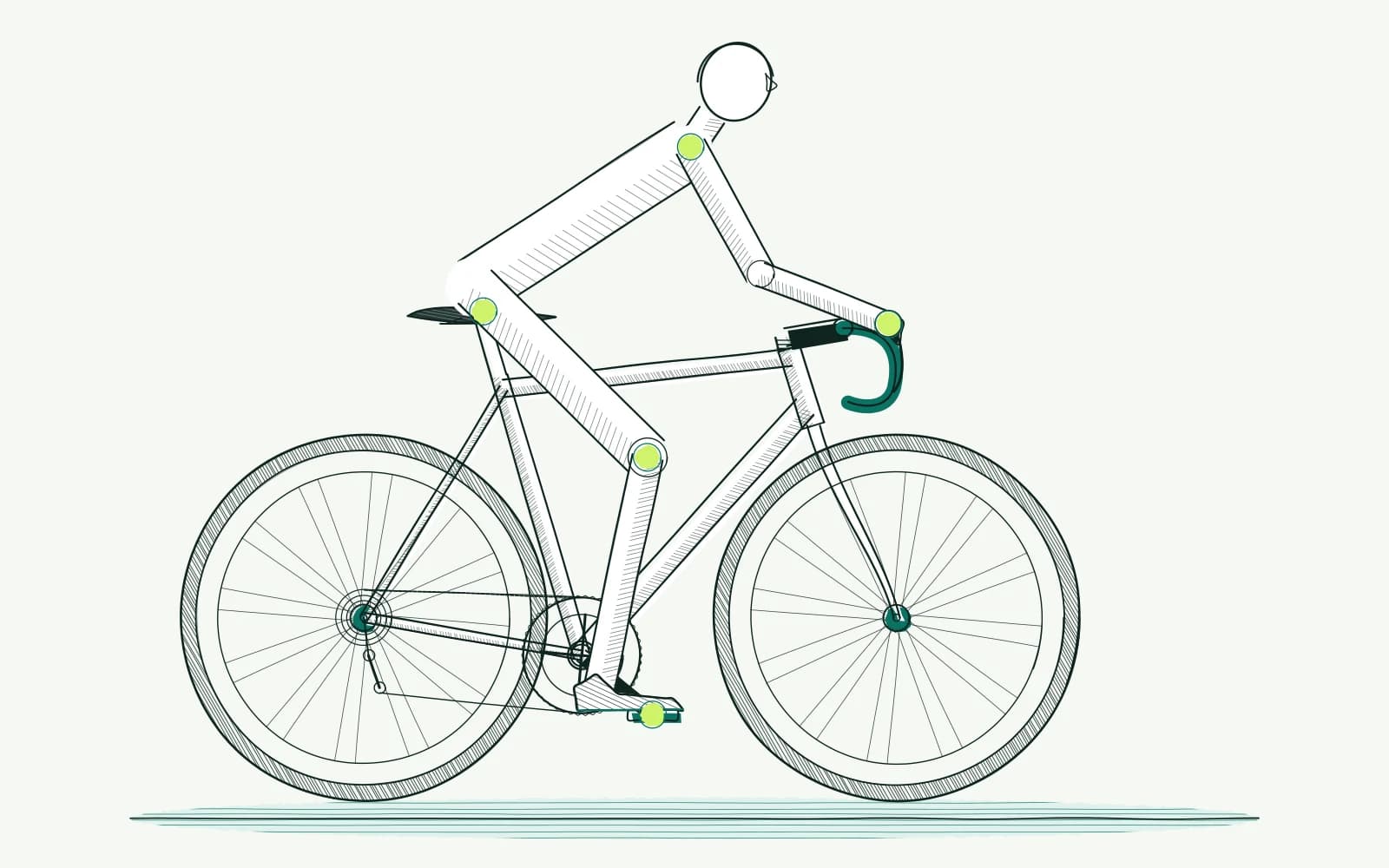
Your body rests on several contact points. Hands, pelvis and feet share the load while riding. Losing support in one area may increase demands elsewhere. A local symptom can therefore relate to a setting in another part of the bicycle, although that is not always the explanation.
Hand pressure, for example, deserves consideration of reach and saddle support. Foot symptoms invite checks of shoe shape, closure and pedal contact. Neck tension also calls for attention to looking ahead safely. These are investigation prompts, not a checklist for diagnosing a medical cause by yourself.
Time to symptoms provides context. A problem present immediately on mounting prompts different questions from one appearing after an unusually long ride. Consider duration, surface, effort and recovery. A carefully measured bicycle does not automatically make a sudden increase in training load appropriate for your body.
Online measurements describe proportions but cannot observe movement under load. A photograph can support a discussion without measuring pressure or numbness. The NHS information on neck pain highlights accompanying tingling as a reason to seek help. Do not respond to these signs with increasingly extreme bicycle settings.
A fitter investigates how the bicycle and your movement work together. A clinician assesses symptoms that need medical investigation. These roles complement each other. You do not have to exhaust every possible stem, saddle or shoe before deciding to stop experimenting independently and ask for appropriate personal help.
How to approach it
-
Make a short symptom record. Note location, left or right side, sensation, ride duration and hand position. Add what relieves the problem and what makes it worse.
Record whether you notice anything at rest. A concrete description offers more useful information than a single score for how unpleasant the ride felt.
-
Check safety and easily visible problems. Confirm that saddle and bars are secure, shoes are not excessively tightened and brakes are reachable. Look for local pressure from clothing, a seam or a displaced insole.
Repair looseness or damaged components before a fitting trial. An unstable bicycle cannot provide a useful starting point for comparison.
-
Record the current settings. Measure saddle height from a chosen bottom-bracket reference, note setback and photograph your hand position. Use a tape measure, removable tape and a side photograph.
Write down the exact reference points for each measurement. Keep previous components when replacing something so comparisons remain possible rather than depending on memory.
-
Choose the guide best matching the location and timing. Follow one small trial there, such as a 3 mm saddle movement when relevant. That increment is a practical comparison, not a diagnosis.
Avoid changing saddle, shoes and handlebars together. Have uncertainty about installation or movement assessed before making further changes to the bicycle.
-
Compare two or three easy rides with similar duration and conditions. Record whether symptoms start later, earlier or at the same point. Restore the baseline if things worsen.
Improvement in one place does not count as success if new pain appears elsewhere. Do not extend the trial just to justify an uncomfortable position.
-
Stop for sharp pain, numbness, weakness or radiating tingling. Pain at rest, night pain or swelling calls for medical assessment. Symptoms following a crash or sudden deterioration do not belong in repeated self-directed fitting trials. If problems recur after three or four careful adjustments, take your record to a fitter or clinician.
Further reading
Neck pain cycling: relax your shoulders focuses on looking ahead, reaching and tension around the shoulders.
Foot measurement cycling: length and width helps check shoe fit without immediately choosing a larger size.
Indoor trainer bike fit considers problems appearing mainly during uninterrupted indoor sessions.
Bike fit riding styles relates contact points to the purpose of your ride.
The bike fit calculator organises body measurements; it does not diagnose the cause of pain.
Frequently asked questions
Is some pain necessary to adapt to a new position?
Do not treat pain as a required part of adaptation. A change can feel different, but increasing pain or numbness calls for stopping and assessment. Keep the trial small and reversible. You do not have to finish a long ride before deciding to return to your previous position.
Can one adjustment improve several symptoms?
It can, because contact points interact. That does not prove the same adjustment works for everyone. Record its effect on every symptom and on bicycle control. Keep a change only if the overall result improves, rather than when discomfort merely moves from one location to another.
Should I immediately buy a new saddle?
Not on the evidence of one uncomfortable ride. First check installation, current position, clothing and changes in workload. Another shape may be relevant, but buying something does not replace assessment. Preserve your existing setting and use an appropriate trial arrangement when comparing a different saddle model.
What should I bring to an appointment?
Bring the bike, usual shoes and riding clothing if requested for the appointment. Include photographs, measurements and brief ride notes. Mention symptoms away from cycling and previous adjustments too. This avoids beginning the assessment by guessing which setting you tried, when you changed it and what happened afterwards.
This guide covers one part of your riding position. Read how bike fitting connects your measurements and bike setup.
Gather your measurements for a calm, structured start to checking your fit.
Start my free bike fit