

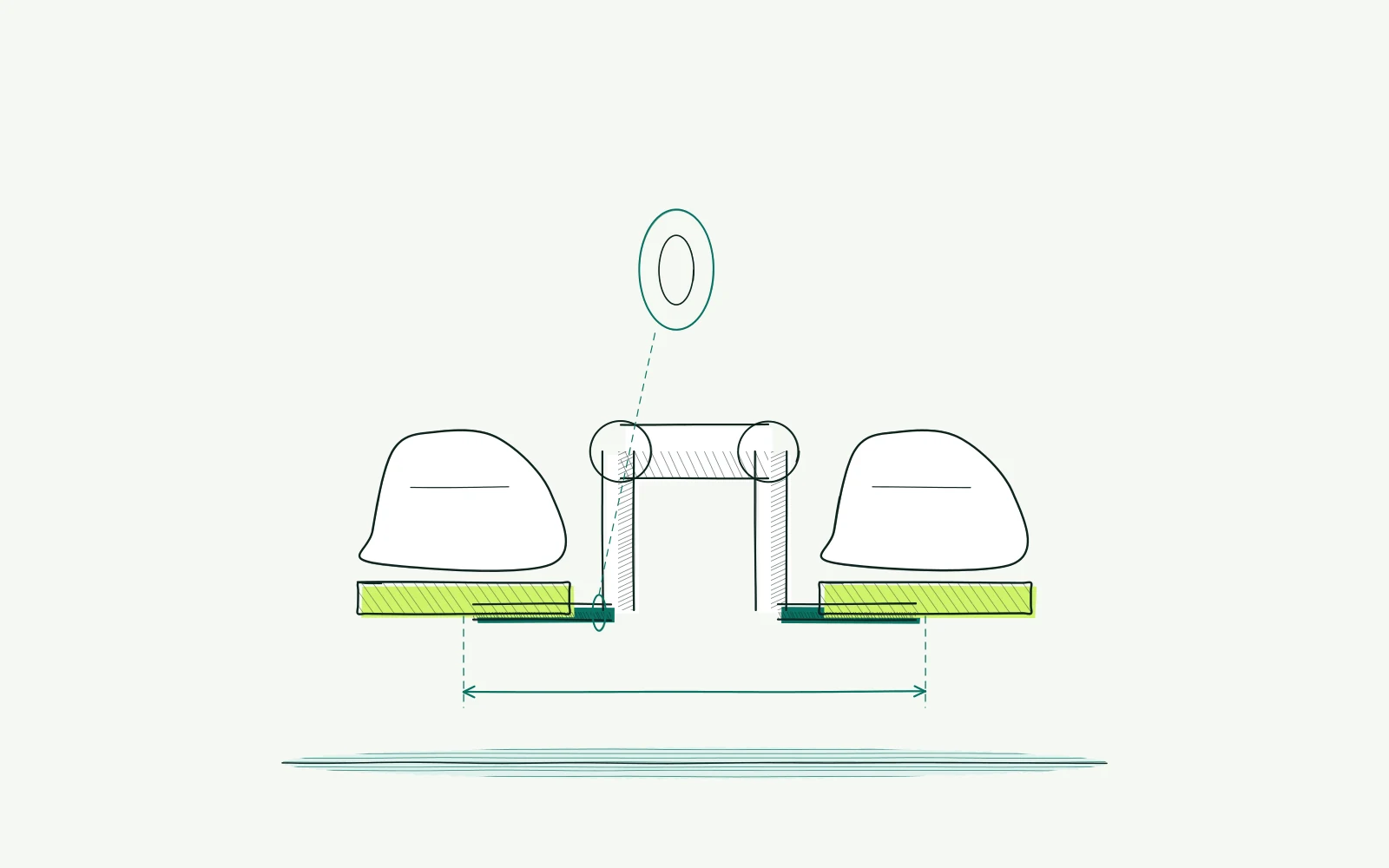
The problem: assessing pedal stance width
Your heel sometimes touches the crank, or your feet seem much farther apart on another bicycle. Perhaps a new pair of pedals feels different even though the saddle and bars have not changed. You may quickly wonder whether you need a wider or narrower stance.
The question becomes more complicated when your knees do not move in perfectly straight lines. A front-view video can show differences, but does not provide an automatic answer. That image alone cannot establish the required spacing. A wider shoe or different cleat angle can also change the appearance.
First describe what you actually notice. Is there contact with the crank, discomfort while pedalling or only a difference on video? Record which bicycle and shoes are involved. Assess the left and right separately.
Do not change components solely to copy an image online. You need a safe, testable position for your particular equipment combination.
Background: different distances and different components
Crankset width and the distance between your feet are not the same measurement. Crankset Q-factor describes the distance between the pedal mounting faces. Pedal axles then place the pedals farther outward. Cleat position additionally determines where the shoes sit relative to those pedals.
TIME describes the relationship between crank width, pedal axles and stance width. Always check the reference points used by a manufacturer. A measurement for one pedal axle is not directly comparable with the total distance between both feet.
Moving a cleat toward the inner side of the sole places the shoe farther outward once clipped in. This differs from rotating the cleat. With rotation, the heel may be the part that needs more room. Check which direction you are actually changing.
Washers and longer axles are not universal solutions. Additional spacing at the connection changes installation. The required thread engagement and any clearance for a power meter remain safety considerations. Use only components and installation methods approved for your pedal and crank.
Wahoo provides specific installation requirements for SPEEDPLAY POWER, including clearance around the power meter. Those instructions do not authorise using the same washers with other pedals.
An online tool can organise this equipment information, but cannot choose a personal stance width from your height. With pain or uncertainty about movement, a fitter is more useful than guessing with extra components.
How to approach it with bike fitting
-
List the equipment without loosening anything.
Record the crank model, pedal model, axle version, shoes and cleats. Photograph both connections. Find current manuals for the exact combination.
An already installed washer does not prove that installation is correct or that another washer can be added safely.
-
Record clear reference points.
Note manufacturer dimensions in millimetres and specify what each describes. Photograph cleat placement beneath both soles.
Do not measure diagonally between shoes and call that crank width. Ask a mechanic to inspect installation if components or measurement points remain unclear.
-
Choose the relevant direction.
When space beside the crank is limited, first distinguish shoe position from heel direction. Check whether it happens with only one pair of shoes.
Do not change cleats, saddle and pedals simultaneously. Discuss knee pain separately; its location does not automatically tell you that a wider stance is needed.
-
Stay within approved limits.
A sideways cleat adjustment must remain within the mounting range. Record displacement in millimetres and keep rotation unchanged when comparing width alone.
For other axles, washers or extenders, obtain confirmation from the manufacturer or mechanic. There is no universal permitted washer thickness for every pedal.
-
Check safety before the test ride.
Have tightening torque, attachment and clearance checked against the manuals. Practise engagement and release with support. Pay attention to the heel while releasing as well.
Do not test a questionable threaded connection to discover whether wider feels better; safe installation comes before the fit experiment.
-
Compare and record the result.
Complete two to three easy rides with one change, provided you remain symptom-free. Record crank contact, comfort and new symptoms.
Stop if things worsen and restore the previous safe setup. The bike fit calculator helps with general bicycle measurements, but does not recommend washers or a personal stance width.
Warning signs: stop for numbness, spreading tingling or weakness. Consult a clinician for swelling and pain at rest or at night. If pain remains after three to four careful adjustments, seek a fitter and medical advice where appropriate. Technically unsafe installation needs immediate correction, not another test ride.
Further reading
-
Cleat position explains the differences between sideways adjustment, rotation and moving the cleat forward or backward.
-
Cycling shoe width: finding the right last helps assess space inside the shoe separately from the distance between both feet.
-
Cycling shoe insoles: support without pressure discusses support without assuming an extra correction beneath the pedal.
-
Knee pain when cycling: what can you check? helps describe symptoms before choosing an adjustment direction.
-
Use the bike fit calculator for overall position alongside separate checks of pedals and cleats.
Frequently asked questions
Does hip width determine how far apart my pedals should be?
Not directly. One body measurement cannot fully describe how you move on the bicycle or how your shoes connect. Do not treat it as an automatic ordering size for longer axles. Discuss a specific symptom and your existing equipment with a fitter before changing anything.
Can I place ordinary metal washers between pedal and crank?
Not without approval for that combination. A washer can affect attachment and clearance. Follow the exact pedal and crank manufacturer instructions or ask a mechanic. Permission to use a washer with one product is not general approval for a different product.
Must stance width match across all my bicycles?
Matching a number is not a goal in itself. Bicycles, shoes and intended use can differ. First establish whether a real comfort problem exists. Compare the whole combination, and do not change a comfortable bicycle solely to copy a measurement from another one.
Will a wider stance fix knees that move outward?
Movement direction alone cannot answer that. A video can support a conversation with a fitter, but cannot establish a cause. Avoid adding corrections solely to make the image look straighter. Have pain or a clear change in movement assessed rather than guessing at a remedy.
This guide covers one part of your riding position. Read how bike fitting connects your measurements and bike setup.
Record your general riding position and have pedal installation checked separately for safety and fit.
Start your free bike fit