

The problem: assessing cycling shoe insoles
You feel a firm edge beneath your arch after installing another insole. Or your foot feels better supported, but the shoe now pinches on top. Perhaps you expect extra support to resolve burning toes. It becomes tempting to keep trying higher or softer insoles.
First ask exactly what you want to change. Are you replacing a worn insole, addressing movement inside the shoe or seeking help with recurring discomfort? These situations may need different approaches. The word orthotic does not itself explain what a particular product is suitable for.
Describe where you feel the insole and when that begins. Is it different while standing, sitting or only while pedalling? Record the shoe, socks and original insole. Compare both feet without assuming they respond identically.
An insole should make your assessment clearer. It is not a reason to accept pressure or numbness as an essential part of getting used to equipment.
Background: support within limited space
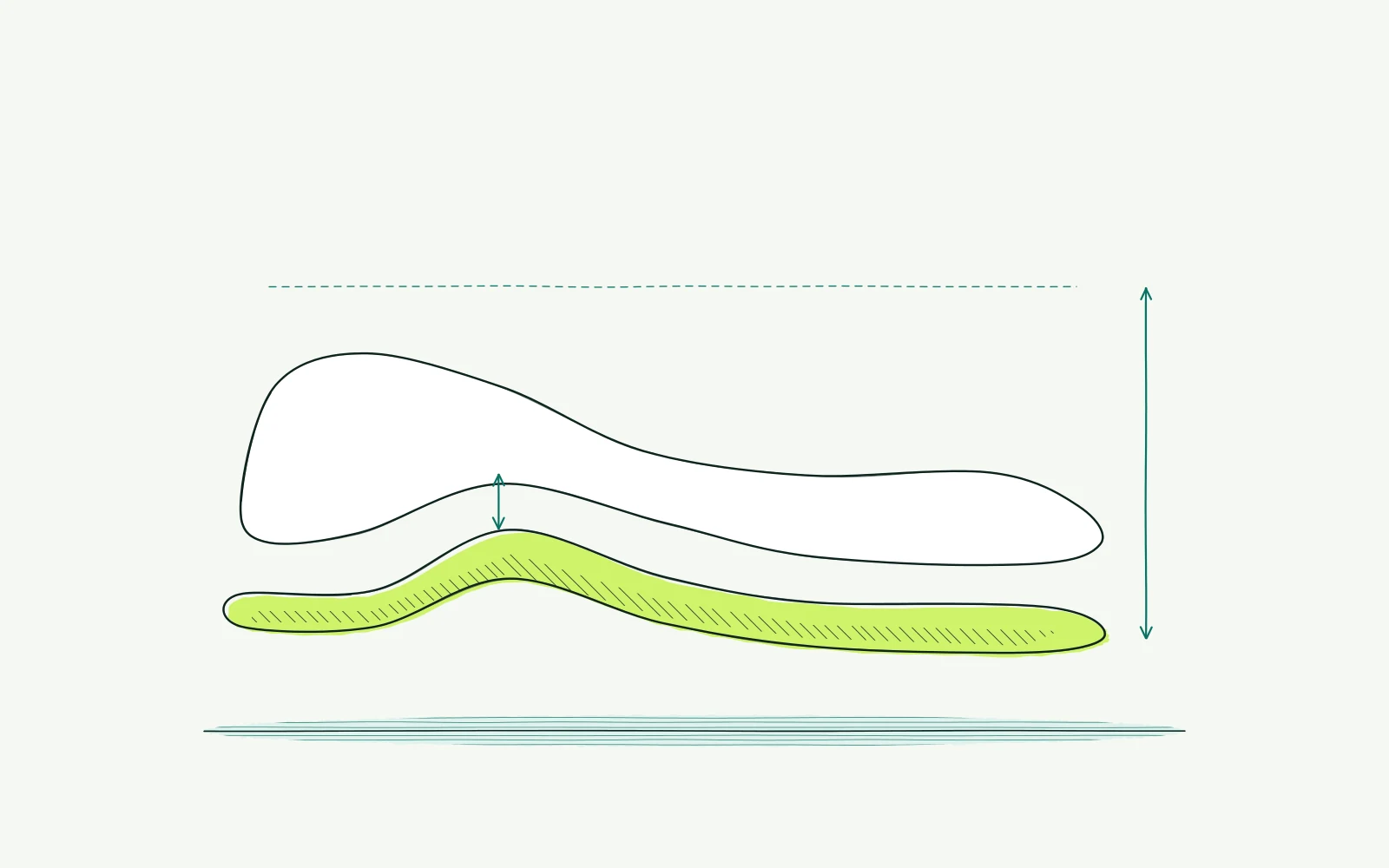
The insole sits between your foot and the shoe's fixed sole. It influences where contact occurs and how much space remains inside the shoe. Height beneath the arch is only one property. Shape, thickness at the forefoot and the fit around the heel matter too.
A raised area that feels comfortable beneath one foot may press in an uncomfortable place beneath another. Choosing the highest support is therefore not a universal fitting rule. A high arch in a photograph does not prove which support is needed while cycling either.
Shimano describes insoles with interchangeable arch support as part of certain shoes. This shows that support can vary between systems. It does not establish that every rider needs extra height or that such an insole treats a specific symptom.
Notice what happens above the foot as well. A different thickness can reduce room at the instep. Tightening the closure to prevent movement may then add pressure. Assess the combination of foot, insole and shoe rather than the loose insole on a table.
An insole, a wedge and a spacer beneath the cleat are different interventions. They do not change the same parts of the connection to the bicycle. Do not combine them on your own to correct a feeling of asymmetry.
Online measurements can organise your observations, but cannot prescribe a medical orthotic. If you already use prescribed insoles, discuss changes with your clinician. A fitter can assess the cycling environment without replacing that medical assessment.
How to approach it with bike fitting
-
Record the existing setup.
Remove the original insole and photograph its upper and lower surfaces. Note the brand, version and any separate support elements. Check that it lies flat inside the shoe rather than curling.
A shifted or damaged insole needs attention before you experiment with more support.
-
Check the shoe with your usual socks.
Look for pressure around the forefoot, instep and heel. Separate insufficient room from a local edge beneath the foot.
Measure both feet using the shoe manufacturer's instructions and record millimetres. No foot-width measurement alone tells you how much arch support to add.
-
Choose a suitable replacement system.
Check its size, shape and compatibility with the shoe. Follow instructions for any interchangeable elements. Do not casually stack two complete insoles.
Trim or heat them only when the manufacturer gives clear instructions. Have prescribed insoles assessed by your clinician before altering them yourself.
-
Make one comparison.
Keep shoes, socks, cleat position and saddle settings unchanged. Compare the original insole with one suitable alternative. Describe where contact feels different, rather than only whether it feels softer.
Do not choose additional height because another cyclist uses it. There is no universal millimetre increment for supporting every arch.
-
Test briefly and gently.
First check that the shoe closes without pinching and that you can release safely. Then compare two to three easy rides per change while remaining symptom-free.
Record the location and timing of discomfort. If the foot becomes painful or numb, stop and restore the previous comfortable combination.
-
Review overall position separately.
The bike fit calculator provides a starting point for general bicycle measurements. It does not prescribe insoles or assess a foot condition.
Do not use its result to justify adding a lift or wedge beneath one foot. Bring your notes to a fitter when the cause remains unclear.
Warning signs: stop for loss of sensation, spreading tingling or weakness. Have swelling and pain at rest or at night medically assessed. If symptoms remain after three to four careful adjustments, seek a fitter and medical advice where appropriate. Discuss existing medical foot problems earlier; repeated equipment trials are not a substitute for care.
Further reading
-
Cycling shoe width: finding the right last helps check whether the shoe shape offers enough room before you add support.
-
Cleat position separates position beneath the shoe from changes made inside it.
-
Pedal stance width explains why a greater distance between your feet is a different adjustment question.
-
Knee pain when cycling: what can you check? helps put new symptoms after an adjustment into context.
-
The bike fit calculator organises general cycling measurements without promising a personal insole prescription.
Frequently asked questions
Is a softer insole always more comfortable while cycling?
Softness does not establish whether the shape and available space fit. Assess where you feel contact and whether the shoe closes comfortably. Compare one alternative with the original insole. Use comfort during an easy test as a practical observation, rather than only pressing the material with your fingers.
Can I use my everyday orthotics in cycling shoes?
Do not assume they automatically fit. Your clinician can assess whether their purpose and the shoe's space are suitable. Bring the cycling shoes and original insoles. Do not alter prescribed orthotics yourself to make them fit, or stack them without specific advice.
Should both feet use the same support?
A single photograph or shoe size cannot answer that. Start by documenting both existing setups. Discuss clear differences in comfort or prescribed support with the appropriate professional. Do not add a correction solely because you want the feet to look symmetrical.
What if the new insole makes my instep feel squeezed?
Stop the comparison and check how much space the insole occupies. Loosening the closure can provide information, but cannot make an unsuitable combination fit. Return to the previous comfortable insole and discuss a suitable alternative. Do not continue riding with pain or loss of sensation.
This guide covers one part of your riding position. Read how bike fitting connects your measurements and bike setup.
Use your general bike fit as a starting point and have individual foot support assessed separately.
Start your free bike fit