

The problem: which bike frame size really fits?
You are looking for a bike and fall exactly between two sizes in the chart. One seller describes the smaller size as sporty, while another calls the larger size comfortable. A used bike looks appealing, but its size number differs from your current bike. A straightforward buying question quickly becomes a collection of conflicting rules of thumb.
Perhaps you already own a bike and wonder whether its size is wrong. The handlebar feels far away or you cannot put the saddle where you want it. That can justify checking the available adjustment range, but it does not independently prove the frame size is incorrect.
This guide helps separate the fixed shape of a frame from the parts that remain adjustable. You are not seeking the right label, but a bike that allows a workable riding position. Write down which measurements and actions matter to you before choosing between two offers.
Background: a size label does not describe the complete bike
A frame has fixed dimensions. The assembled bike adds a seatpost, saddle, stem and handlebar, among other parts.
Together they determine where the contact points can sit. A suitable frame therefore still needs an individual setup. Conversely, adjustable parts cannot compensate for every difference in frame shape without limits.
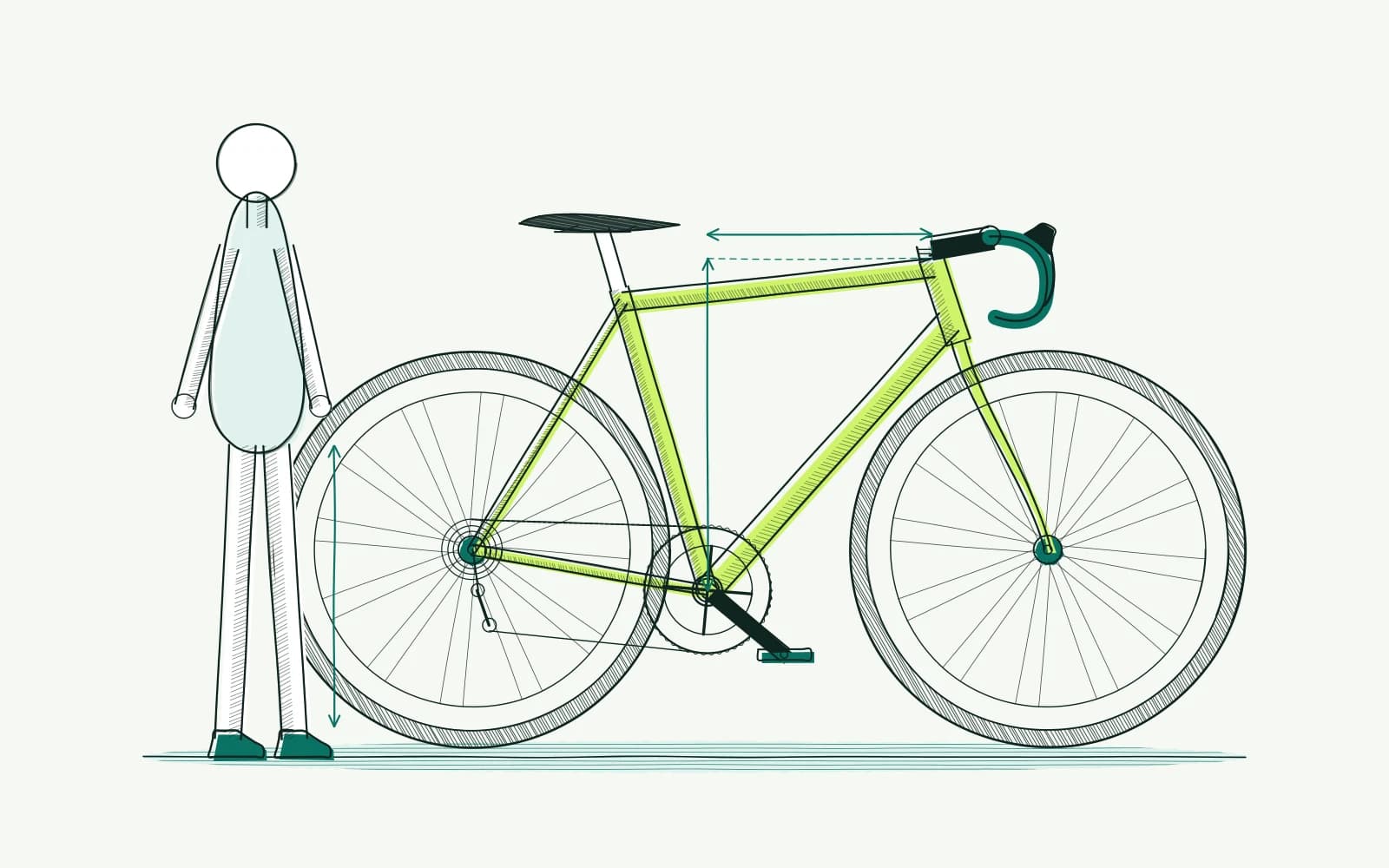
Stack and reach help describe that fixed shape. Stack is the vertical distance from the bottom bracket to the top of the head tube.
Reach describes the horizontal distance between those references. The Trek geometry table shows those directions separately. Always compare such values for the actual model and model year you are considering.
These dimensions are not saddle height or distance to the hoods. Stem, handlebar shape and saddle position belong in that second comparison. Clearance above the top tube also tells only one part of the story. You need to mount and dismount safely and operate the bike while seated.
Your height helps create an initial shortlist. Inseam adds information about the relationship between your legs and the rest of your body. Neither alone tells you how the complete position feels. Include your normal shoes and intended riding in the comparison.
An online size proposal helps you ask focused questions. It does not approve a used bike or its installation.
Ask a mechanic about uncertain technical adjustment room. A fitter can help when two complete setups seem possible but feel different. Pain also requires a separate assessment; a size label is not a diagnosis.
How to approach it with bike fitting
-
Measure before comparing models: Measure height and inseam following the instructions in the frame size calculator. Use a tape measure and ask someone to help with readings. Repeat the measurement if your position or reference point was unclear. Record the units and method so a second calculation does not quietly depend on different inputs from the first.
-
Record the exact bike details: Find the model, year and size in the manufacturer's geometry information. Do not compare only a letter or number across brands. Place stack, reach and relevant adjustment limits alongside one another. If reliable information is missing for a used bike, ask for an inspection rather than treating the advertisement as a measurement report.
-
Identify the desired contact points: Use a comfortable existing bike as a reference if you have one. Measure saddle height and handlebar position from consistent points and record the dimensions in millimetres. Without such a reference, use the calculated proposal as an initial question. Have someone check whether the candidate bike can approach that position within manufacturer limits.
-
Assess the complete setup: Check mounting, dismounting, seated pedalling and access to the brakes. Compare bikes with saddle and hand positions made as similar as possible, not with arbitrary shop setups. Do not exceed installation limits to make a size appear suitable. Ask a professional before moving a seatpost, stem or handlebar that you cannot safely adjust yourself.
-
Separate a test ride from a final verdict: A short test ride does not cover every situation in your normal riding. Record what you could check and discuss what remains uncertain before buying. On your own bike, test one safe adjustment over two to three easy rides while you remain symptom-free. Preserve the original measurements and return to the recorded safe position if things become worse.
-
Set a limit on further adjustments: Stop if you cannot brake, steer or dismount safely. Do not try to rescue an unusable setup through repeated component changes without professional assessment. Seek medical help for lost sensation, radiating tingling, pain at rest or at night, or swelling. If pain persists after three to four careful adjustments, involve a fitter and, where appropriate, a clinician.
Further reading
- Bike fit and body proportions helps use your own proportions without treating a size label as a complete description of your position.
- Bike fit for a short torso investigates distant handlebars before concluding that a smaller frame is required.
- Bike fit for beginners gives a safe sequence for the first checks on a new or borrowed bike.
- Saddle height helps record one contact point before comparing the adjustment room on different bikes.
- The frame size calculator provides an initial selection based on your own measurements and chosen bike type.
Frequently asked questions
Should I always choose the smaller of two possible sizes?
No. Compare the complete position each bike can provide. A smaller size can also change the available handlebar height, so examine more than the forward distance. Ask for a test setup with similar contact points and record where each bike reaches its installation limits before deciding which is more suitable for you.
Can the same size number feel different with another brand?
Yes. Do not treat the number as a complete geometry description.
Check the exact model, size table and fitted components. Even with similar fixed frame dimensions, handlebar and saddle positions may differ. Measure those contact points separately when you are trying to transfer a comfortable position from your current bike to another one.
Is clearance above the top tube enough to assess the size?
No. It is one check alongside saddle adjustment, handlebar position and brake operation. A bike can provide enough standing clearance yet still feel uncomfortable while riding. Also assess how you mount, dismount and reach the brakes safely from your normal seated position rather than relying on one stationary comparison alone.
Can a different stem always correct an unsuitable size?
No. A stem changes part of the position, not every fixed frame dimension.
First establish which distance or height is unsuitable and whether the necessary installation is permitted. Buying a component without that check can move the problem elsewhere. Sometimes another frame shape provides a more useful comparison than yet another replacement part.
This guide covers one part of your riding position. Read how bike fitting connects your measurements and bike setup.
Use your own measurements for an initial shortlist, then check the complete bike.
Calculate your frame size