

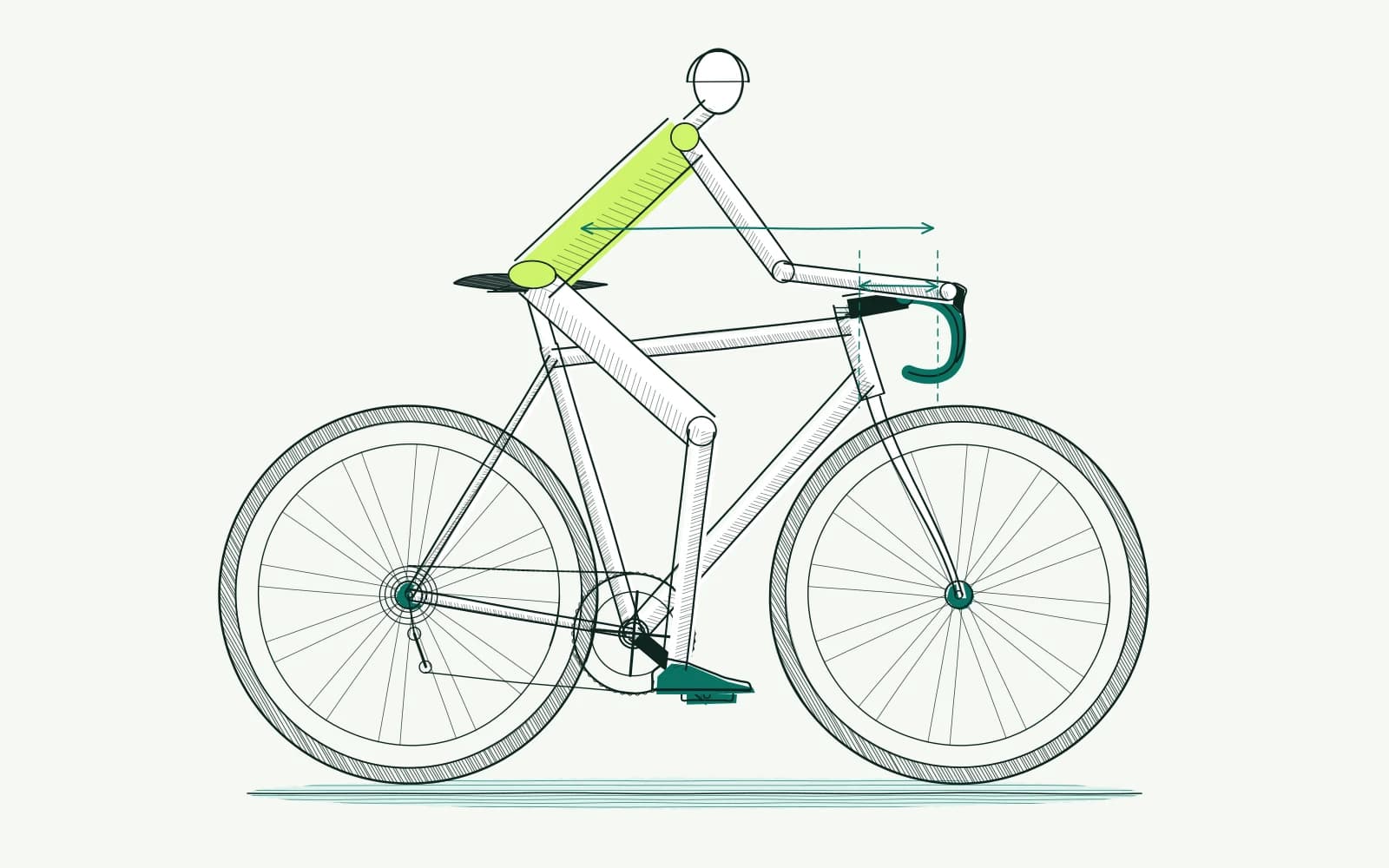
The problem: a short torso and distant handlebars
You can reach the pedals comfortably, yet the brake hoods always seem just beyond a comfortable distance. You notice yourself sliding forwards or riding with rigid arms. Holding the top of the handlebar may feel easier. Once you return to the hoods, the search for a comfortable position begins again.
This may become noticeable on longer stretches spent in the same hand position. Perhaps you have relatively long legs and a short torso, or suspect that because ordinary sizing charts seem unhelpful. A label does not identify the setup that works for you. Arm length, handlebar shape and the current installation also matter.
The aim is not to place you in a category. You want to pedal and brake without continually finding another place to sit. This guide helps establish which distance you actually want to change. That prevents a saddle adjustment from hiding a handlebar problem while creating a new difficulty somewhere else.
Background: hand distance involves more than frame size
The distance you feel runs from where you sit to where your hands actually rest. That complete distance is not given by one frame measurement. Frame, stem, handlebar shape and hood position contribute together. Handlebar height belongs in the comparison too, because you do not reach towards your hands only in a horizontal direction.
Frame reach is a geometric measurement referenced to the bottom bracket. It is not the distance from your saddle to your brake hoods.
Use such measurements to compare frames, but do not confuse them with the complete position on an assembled bike. The Trek geometry table lists frame reach and stack separately. That distinction also helps when comparing two bikes carrying the same size label.
Moving the saddle forwards shortens the distance to the handlebar but also moves your seated position relative to the pedals. It is therefore not a neutral solution to distant handlebars. A workable saddle position deserves its own assessment while pedalling. After that, you can investigate how the position of your hands fits that seated position.
A short torso does not predict one required stem length either. Your arms, chosen hand position and intended riding remain relevant. A photograph or body measurement cannot complete that assessment. Pain or tingling does not prove the stem is responsible.
An online calculation can make differences visible. A fitter can assess what happens while you pedal and change hand position. Ask for installation advice before moving components that affect brake operation, cables or handlebar attachment.
How to approach it with bike fitting
-
Describe where the distance feels excessive: Record whether it happens on the hoods, handlebar tops or drops. Also note whether you slide forwards and when this starts. Compare more than the sensation in your arms alone. Check whether you can brake directly and safely from your usual seated position without having to move your hands first.
-
Separate saddle checks from handlebar checks: Record your current saddle height and seated position with a tape measure and side photograph. Measure in millimetres from fixed reference points. Note where on the saddle you normally sit. Use the bike fit calculator for an initial body-measurement comparison, but do not automatically slide the saddle forwards when hand distance differs considerably.
-
Measure the actual hand position: With the bike upright, measure from a fixed saddle point to your usual supporting hand position. Record the height difference too and take a photograph showing both reference points. This measurement helps track your own adjustments. It is not a universal target that you need to share with any other particular rider.
-
Choose a targeted handlebar change with help: Discuss whether bar height, stem, handlebar shape or hood position is the relevant variable. Change only one of those during the same comparison. Record the original and new measurement and the direction of the change.
There is no fixed millimetre step for every short torso. Respect manufacturer limits and leave unfamiliar installation work to a professional.
-
Test braking before the longer comparison: In a safe place, check that you can reach the brakes and steer properly. Then compare two to three easy rides while you remain symptom-free. Use the same hand positions and a similar route.
Watch for sliding, tense arms and new pressure on hands or saddle. Return to the recorded safe position if things worsen.
-
Stop when the comparison becomes unsafe: Do not continue with lost sensation or symptoms that affect brake operation. Seek medical assessment for radiating tingling, pain at rest or at night, or swelling. If pain persists after three to four careful adjustments, consult a fitter and, where appropriate, a clinician. A label describing body proportions is never a substitute for investigating persistent symptoms.
Further reading
- Bike fit and body proportions helps you use body measurements without assigning one compulsory position or component dimension to them.
- Bike frame size shows which fixed frame measurements to compare when adjustable components do not provide enough room.
- Bike fit for beginners offers a calm sequence when adjusting and testing a bike still feels unfamiliar.
- Handlebar width and hood position examines where your hands rest and how you operate the brakes.
- The bike fit calculator helps organise your own measurements before discussing a different handlebar position.
Frequently asked questions
How can I be certain that my torso is short?
You do not need certainty about that label for an initial check. Record where the position feels uncomfortable and repeat measurements using the same instructions. The aim is useful information about your bike, not a threshold for a body category. A fitter can assess those proportions alongside how you actually move.
Does a short torso always mean choosing a smaller frame?
No. A different frame changes more than the forward distance.
Compare handlebar height, saddle adjustment range and room to mount and dismount safely too. When uncertain, have two complete setups assessed. The smaller size label alone cannot tell you whether the bike will allow a genuinely better riding position.
Can I simply sit closer to the hoods before changing anything?
You can observe when you move, but avoid making sliding your permanent solution. It also changes where you sit relative to the pedals. First check whether the saddle position is workable. Then discuss how the hoods can become reachable from that position without continually searching further forwards on the saddle.
Is replacing the stem always the cheapest solution?
You cannot establish that from body proportions alone. The question may concern handlebar height or where the hands rest. First establish which measurement needs to change and whether the installation permits it. That helps avoid buying components which change a different distance from the one that actually feels uncomfortable while riding.
This guide covers one part of your riding position. Read how bike fitting connects your measurements and bike setup.
Record your body measurements before deciding which distance on the bike you want to change.
Calculate your bike fit