

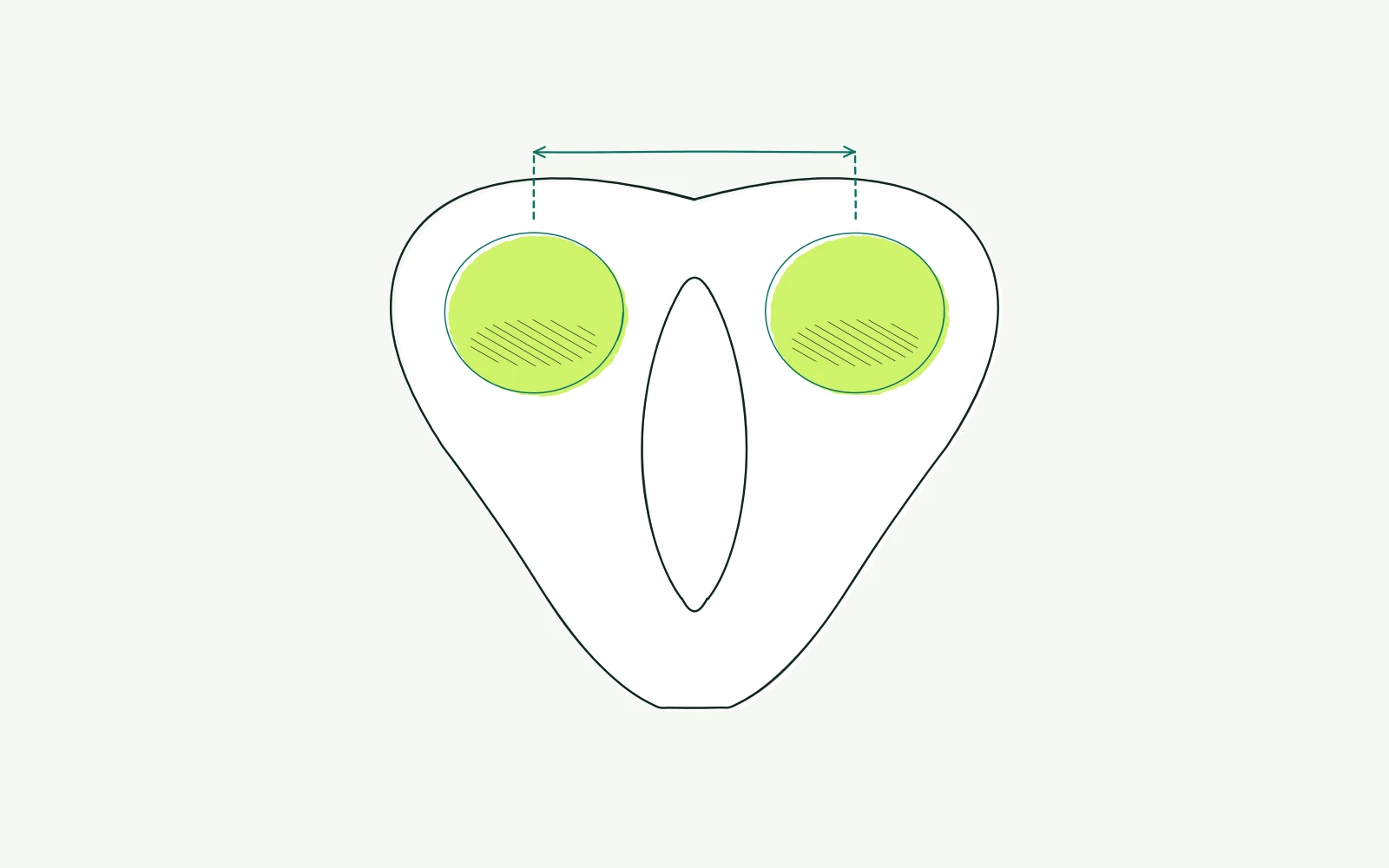
The problem: saddle pain cycling
Your sit bones feel tender after a ride. On another ride, the skin beside the saddle edge rubs instead. Or you notice reduced sensation between your legs. These are different experiences.
Avoid describing all of them simply as saddle pain when asking for help.
Record where the problem is and how it feels. Does it appear immediately, during climbs or only later? Does it also happen indoors? Note whether the feeling disappears after dismounting or stays with you.
That helps a discussion, but does not provide a diagnosis on its own.
Perhaps you recently tried a new saddle, different shorts or a longer ride. Changing handlebar height can affect how you sit too. The most obvious new purchase may not be the only cause.
Start with your whole position. Do not force yourself to adapt when your skin is damaged or sensation is reduced.
Background: support is different from pressure
A saddle needs to support you in your riding position. That support changes between sitting upright and leaning forwards. Width alone therefore cannot tell you whether a saddle fits. Shape, the transition to the nose and pelvic position also matter.
Two saddles of equal width can feel very different.
Measuring your sit bones gives you a starting point for comparison. It does not prove that pressure is distributed well. A cutout may provide space in one area while making an edge noticeable elsewhere. Extra soft padding is no guarantee of pleasant contact throughout a long ride either.
According to British Cycling on saddle choice, saddle comfort and bike setup are connected. Perineal pressure can accompany numbness. That is a reason to stop and assess the problem, not to train harder.
Friction is a separate consideration. Think about movement across the saddle, a fold in your shorts or damp clothing. A long reach to the bars may change how you sit. A saddle that repeatedly makes you slide also deserves attention.
None of those observations automatically proves that your saddle is too high.
An online calculation can suggest a dimension or starting position. It cannot examine your skin or measure local pressure. A fitter can consider movement and equipment together. A clinician is appropriate for skin problems, lost sensation or other persistent symptoms.
Keep those roles distinct when choosing your next step.
How to approach it with bike fitting
-
Describe the symptom first: Record its location, timing and sensation without naming a medical condition yourself. Distinguish tender support points from rubbing and numbness. Record what changed since your last comfortable ride.
Check your shorts for seams, folds and wear. Do not resume testing while a damaged area still causes problems.
-
Measure your starting position: Stand the bike upright on level ground. Use a tape measure from the centre of the bottom bracket to a fixed point on top of the saddle.
Record millimetres, setback and the angle of the same saddle surface. A curved saddle needs a consistent method; do not compare arbitrary surfaces.
-
Check whether you stay where you intend to sit: Do you repeatedly slide forwards or backwards? Also record hand pressure and difficulty reaching the brake hoods. Bring that information before changing the saddle nose angle.
A nose tipped far downwards may shift the problem to your hands. Assess comfort alongside safe braking and steering.
-
Compare purposefully without changing several dimensions together: Use the saddle width calculator to help organise your sit bone measurement and riding position. Treat the result as a comparison point, not a purchase guarantee.
Discuss which change makes sense when symptoms are present. Record an agreed correction in millimetres or degrees and follow the assembly instructions.
-
Test only while it remains reasonable: Compare one change across two to three easy, similar rides. Keep clothing, route and effort as consistent as possible. Record support, sliding and any new symptoms separately.
Stop for pain, numbness or damaged skin. If things worsen, return to the safely recorded original position and seek guidance.
-
Get help in time: Discuss persistent or recurring numbness with a clinician. Also seek medical assessment for swelling, an inflamed skin area, radiating tingling or pain at rest or during the night. If ordinary position-related pain persists after three to four careful adjustments, consult a fitter and, where appropriate, a clinician.
Do not wait through that sequence when sensation is reduced or skin problems are present.
Further reading
- Numb hands cycling: where should you start? helps you recognise when a saddle change shifts extra pressure towards the bars.
- Stem length discusses why handlebar distance and support on the saddle need consideration together.
- Bike fitting science explains what measurements demonstrate and why a calculation cannot replace your riding experience.
- Online bike fit limitations clarifies when supervised fitting or medical assessment is the appropriate next step.
- The saddle width calculator helps you establish a comparison point for different saddles and riding positions.
Frequently asked questions
Is a softer saddle always more comfortable?
No. Soft material changes how you rest on the saddle, but says little about support in the right places. Assess the shape and your position too. A brief impression in a shop cannot replace a calm comparison on the bike.
Never use extra softness to ignore numbness.
Do I always need a saddle with a cutout?
Saddle pain does not automatically mean you need one. A cutout changes the contact surface and can feel different between people and positions. Compare the whole shape and its edges, rather than just the opening. Reduced sensation needs assessment first; choosing a cutout is not a treatment by itself.
Can different cycling shorts solve the problem?
Well-fitting shorts can matter when friction or an intrusive seam is involved. That does not make saddle setup irrelevant. Record which symptom changes when you try different shorts. Do not continue riding on a painful skin area.
Recurring skin problems deserve medical assessment alongside attention to equipment.
Do I simply need to adapt to a new saddle?
You may notice different contact, but enduring pain is not a required part of testing. Plan a short, easy comparison and stop if symptoms appear. Numbness or damaged skin is not normal adaptation. Keep the original setup recorded so you can return deliberately if the result is worse.
This guide covers one part of your riding position. Read how bike fitting connects your measurements and bike setup.
Measure your starting point and compare saddle width with your riding position before choosing a replacement.
Calculate your saddle width