

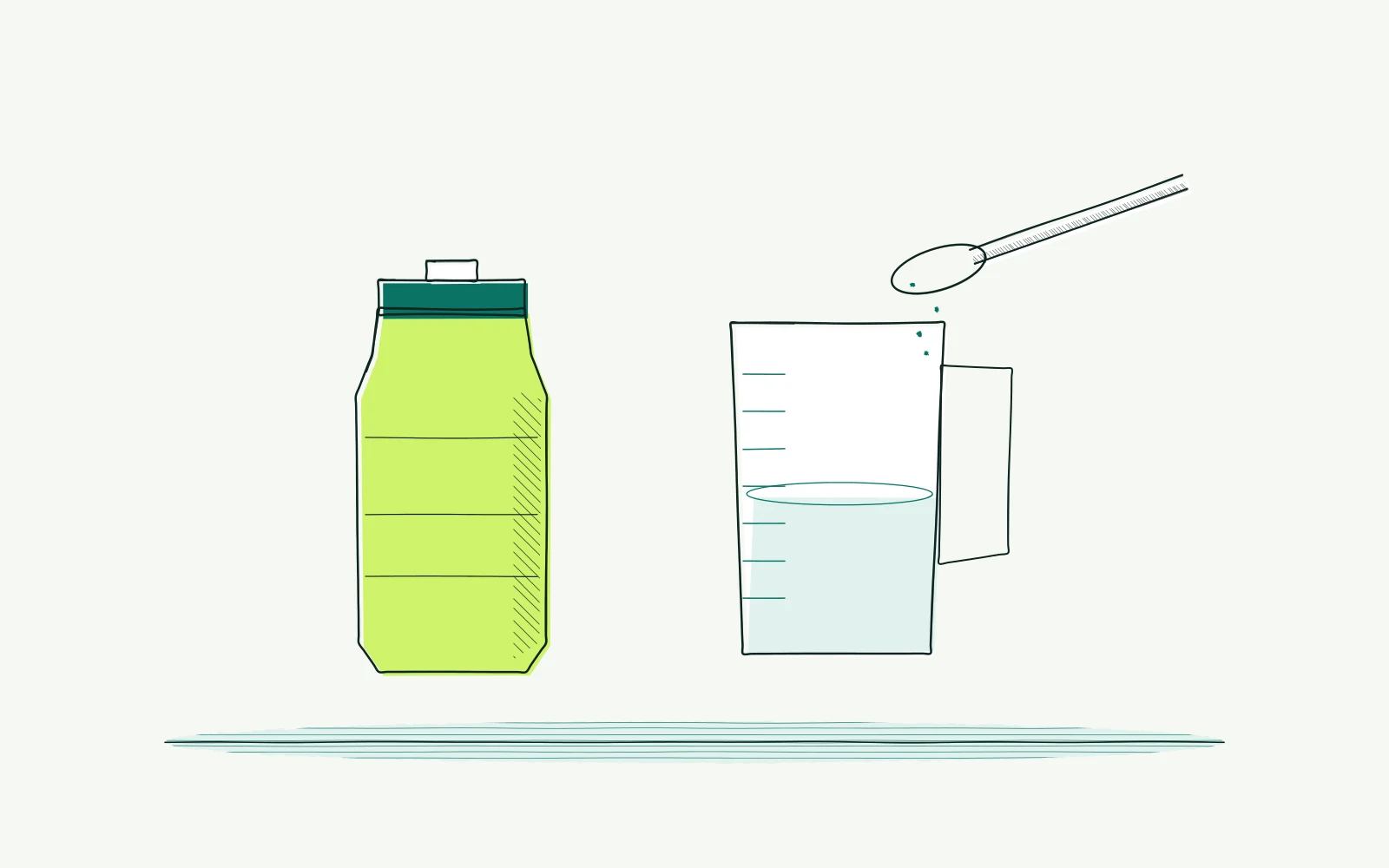
The problem: sodium cycling drink
One label lists sodium per serving, another lists salt per quantity of powder. A friend discusses milligrams per hour while you count only bottles. Those figures do not describe the same thing. Without checking units, you can prepare a much stronger mixture than you intended to use.
Begin with what is actually in the bottle. How large is it, how much water do you use and how much product do you add? A full scoop is useful only when the label defines the corresponding serving. Different products cannot be exchanged simply by using one scoop of each.
The question concerns use as well as carrying capacity. Refilling a half-full bottle changes the ratio if you add another complete serving. Include these actions in your plan so you understand what you actually drink on the road. A tidy preparation calculation is not enough if the mixture changes afterwards.
Background
The tool's source is Sawka and colleagues, ACSM 2007. The sodium figure describes concentration in carbohydrate-electrolyte drinks. The calculator displays it for rides longer than one hour. It is not a personal sweat measurement or a fixed obligation to consume identical sodium amounts during every hour of a ride.
Concentration describes how much substance a volume contains. Amount per bottle follows from concentration multiplied by bottle volume. A smaller bottle of the same drink therefore contains less total sodium without being less concentrated. Keeping these concepts separate prevents a unit conversion from being mistaken for new nutritional advice.
An example makes the distinction visible. Half a litre at 460–690 mg per litre contains 230–345 mg sodium. This is solely a unit conversion.
If you do not finish the bottle, you do not consume its full contents. The time taken to drink belongs to a different calculation.
Heat and perceived sweating are not precise sodium measurements. Sweat loss and composition vary between circumstances and individuals. The tool therefore does not automatically raise concentration at higher temperatures. A personal plan needs more context than the amount of sweat visible on a jersey or the sensation of warmth.
Sodium and carbohydrate are different components of a drink. Salt and sodium also do not mean the same thing on a label. Read exactly what is reported and ask the manufacturer if unclear. Do not mix extra products because separate figures on different labels appear approximately similar to each other.
How to approach it
-
Put the bottle and product label together. Record the actual water volume in litres and the prescribed serving size. Check whether the label specifies sodium or salt, and the quantity to which it refers. If unclear, ask for an explanation before calculating a personal amount or comparing different products on their displayed numbers.
-
Mix according to the chosen product's instructions. Use a measure appropriate to those instructions and the intended water volume. Shake or stir as directed.
Reproduce the same mixture for subsequent trials. An arbitrarily stronger solution is not a sensible way to carry fewer bottles or reduce the water available during your ride.
-
Calculate the amount per bottle separately when concentration is known. Multiply milligrams per litre by the litres in the bottle. Label the result explicitly per bottle rather than per hour. Keep the unit and meaning beside the number so they remain clear when you refer to your notes during a longer outing.
-
Plan safe drinking opportunities and places to obtain more water. Check while stationary that you can reach the bottle without excessive twisting or losing grip. Stop when drinking affects steering control. When refilling, record how much drink remains or prepare a fresh mixture whose composition you can actually reproduce and understand.
-
Test two or three easy rides using the same base mixture in comparable conditions. Record taste, stomach comfort and actual consumption. Avoid changing concentration, product and effort simultaneously.
Return to a previously tolerated mixture if things worsen. Do not force extra fluid or salt simply to reach a predetermined figure at any cost.
-
Treat the calculator as a starting point rather than a treatment for symptoms. Stop and seek help for confusion, serious illness or persistent vomiting. Discuss prescribed fluid or salt restrictions with your clinician. Pain at rest, night pain or swelling also needs assessment; a fitter or extra sports drink cannot explain or resolve those signs.
Further reading
Carbs per hour cycling: make your plan explains how to add carbohydrate from food and drinks together for the ride.
Cycling fueling basics: build a practical plan helps organise products, access and safe opportunities to use them on the road.
Indoor trainer bike fit discusses the separate effects of cooling and a fixed position during indoor sessions.
The fuel and hydration calculator displays sodium as concentration and labels its conversion to your chosen bottle volume clearly.
Frequently asked questions
Is sodium per bottle the same as sodium per hour?
No. Per bottle describes what that container holds. Per hour depends on how much of it you drink during the hour.
The calculator therefore presents bottle conversion as contents, not fixed hourly advice. Do not silently import a time unit from a different nutrition schedule.
Should sports drink become stronger in hotter weather?
Not automatically. Heat alone cannot establish your sodium loss. The tool therefore keeps the cited concentration band unchanged.
Consider conditions, drinking opportunities and previous experience separately. Personal questions about substantial losses or medical restrictions need appropriate professional advice, rather than only a higher temperature setting in a calculator.
Can I combine two different powders?
Do not do so without understanding their complete instructions. Both may contribute sodium, carbohydrate or other ingredients. Adding only one displayed figure overlooks the rest of the mixture. For initial trials, choose a simple, repeatable preparation that follows product information instead of combining several unfamiliar products.
Does a low sodium figure make a drink useless?
No. Products can serve different purposes, and not every ride needs the same preparation. Consider the complete label and your riding context.
Drinking plans are not competitions to achieve the highest concentration. The calculator provides a defined starting point rather than judging the usefulness of every individual product.
This guide covers one part of your riding position. Read how bike fitting connects your measurements and bike setup.
Review concentration and bottle volume separately for your next ride.
Calculate my drinking plan